Wiki Details
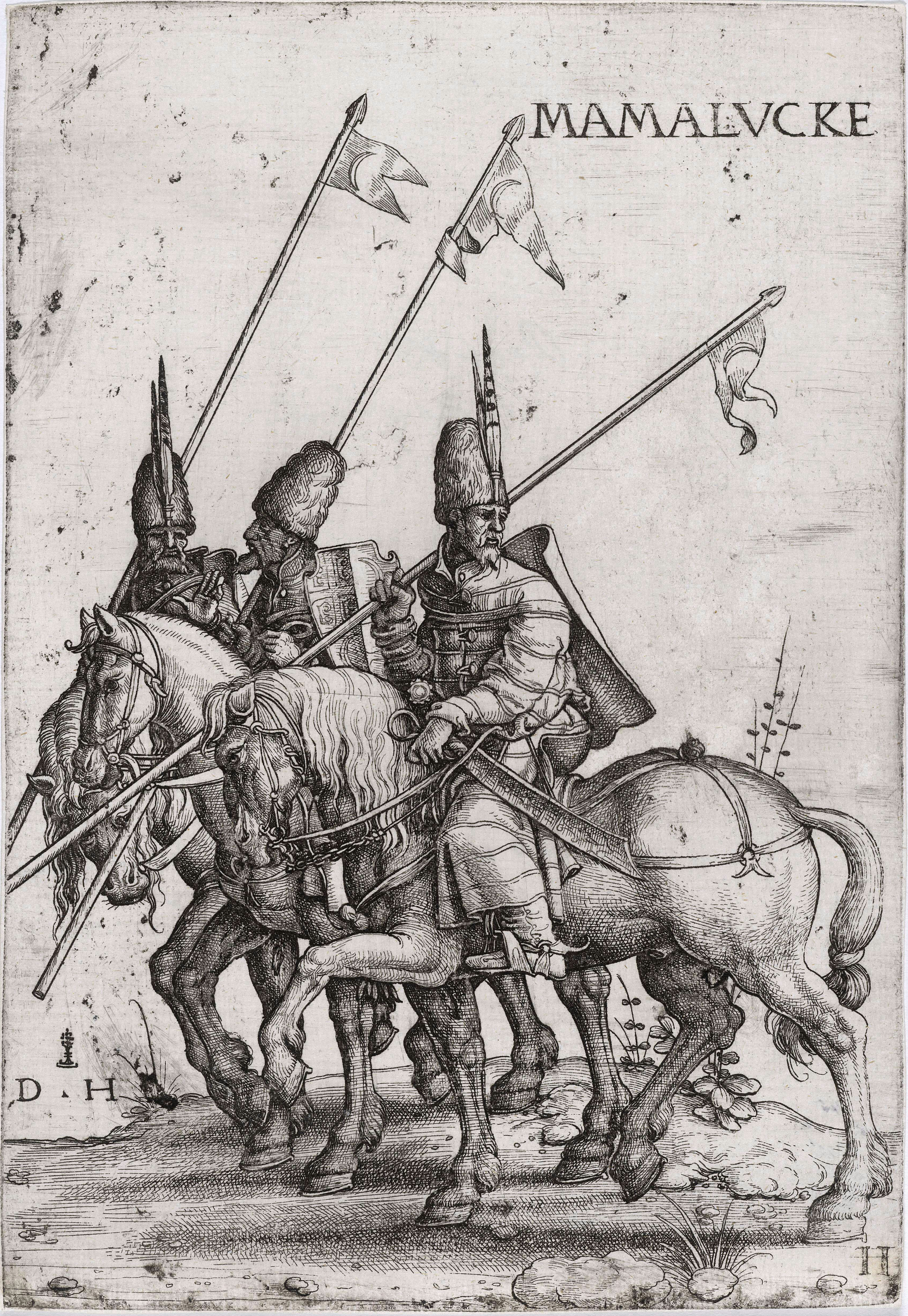
 Mamluk or Mamaluk (; Arabic: مملوك, romanized: mamlūk (singular), مماليك, mamālīk (plural); translated as "one who is owned", meaning "slave") were non-Arab, ethnically diverse (mostly Turkic, Caucasian, Mongol, Eastern and Southeastern European) enslaved mercenaries, slave-soldiers, and freed slaves who were assigned high-ranking military and administrative duties in the Muslim world. They were purchased as military slaves, converted to Islam, and trained in martial and courtly skills. Upon completion of their training they were freed, but remained part of the ruling military caste, forming elite regiments and, in some periods and regions, rising to sovereign power.
The most enduring Mamluk legacy was the knightly military class in medieval Egypt, which developed from the ranks of slave-soldiers. Originally the Mamluks were slaves of Turkic origins from the Eurasian Steppe, but the institution of military slavery spread to include Circassians, Mongols, Abkhazians, Georgians, Armenians, Russians, and Hungarians, as well as peoples from the Balkans such as Albanians, Greeks, and South Slavs (see Saqaliba). They also recruited from the Egyptians. The "Mamluk/Ghulam Phenomenon", as David Ayalon dubbed the creation of the specific warrior class, was of great political importance; for one thing, it endured for nearly 1,000 years, from the 9th century to the early 19th. (See: Ghilman.)
Over time, Mamluks became a powerful military knightly class in various Muslim societies that were controlled by dynastic Arab rulers. Particularly in Egypt and Syria, but also in the Ottoman Empire, Levant, Mesopotamia, and India, Mamluks held political and military power. In some cases, they attained the rank of sultan, while in others they held regional power as emirs or beys. Most notably, Mamluk factions seized the sultanate centered on Egypt and Syria, and controlled it as the Mamluk Sultanate (1250–1517). The Mamluk Sultanate famously defeated the Ilkhanate at the Battle of Ain Jalut. They had earlier fought the western European Christian Crusaders in 1154–1169 and 1213–1221, effectively driving them out of Egypt and the Levant. With the capture of Ruad in 1302, the Mamluk Sultanate formally expelled the last Crusaders from the Levant, ending the era of the Crusades.
While Mamluks were purchased as property, they were enslaved mercenaries and their status was above that of ordinary slaves, who were not allowed to carry weapons or perform certain tasks. In places such as Egypt, from the Ayyubid dynasty to the time of Muhammad Ali, Mamluks were considered to be "true lords" and "true warriors", with social status above that of the general population in the Middle East.
General info from Wikipedia.org